Mapping Correlations Between Game Volatility Levels and Preferred Transaction Speeds Across Portable Gaming Platforms
Finley Schulz · Aug 2, 2026
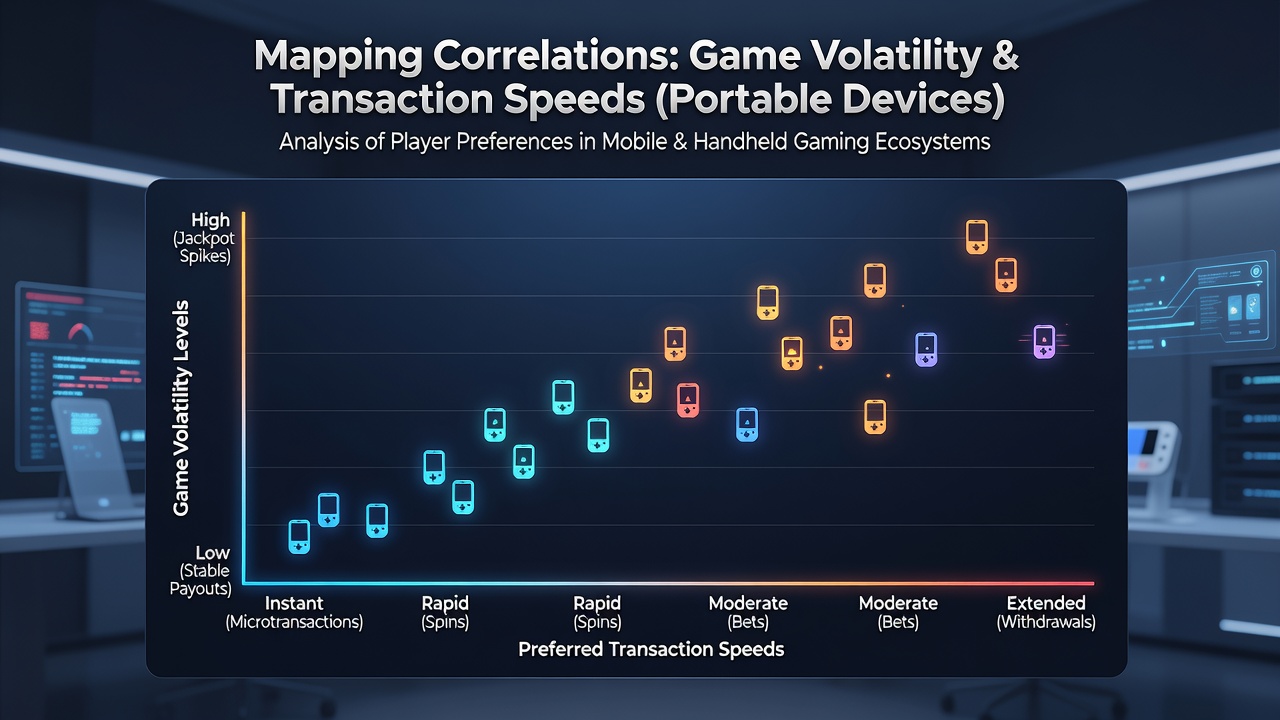
Mapping Correlations Between Game Volatility Levels and Preferred Transaction Speeds Across Portable Gaming Platforms
Portable gaming platforms have expanded rapidly since 2024, with developers tracking how volatility in game mechanics aligns with player choices for deposit and withdrawal processing times. Volatility refers to the frequency and size of payouts in titles like slots or table games, where low-volatility options deliver smaller wins more often and high-volatility ones produce larger but less frequent returns. Transaction speeds range from instant processing to delays of several hours, and data from mobile app analytics shows measurable patterns between these elements across iOS and Android ecosystems.
Defining Volatility Categories in Mobile Game Design
Game studios categorize volatility into three main tiers based on mathematical models embedded in random number generators. Low-volatility games maintain return-to-player percentages around 95 percent with steady small payouts, while medium-volatility titles introduce moderate swings and high-volatility releases emphasize jackpot potential that can exceed several thousand times the stake. Researchers at the Australian Gambling Research Centre documented these classifications in 2025 reports, noting that portable platforms adjust volatility settings through server-side parameters that players cannot directly modify yet influence session length and spending behavior.
Platform operators collect anonymized telemetry on how often users select each volatility tier during onboarding or in-game menus. Figures from North American operators indicate that 42 percent of mobile sessions in the first half of 2026 involved low-volatility choices, whereas high-volatility selections accounted for 31 percent despite their higher risk profile.
Transaction Speed Preferences Across Regions
Preferred transaction speeds vary by region and regulatory environment. Instant deposits via digital wallets dominate in markets with streamlined payment licensing, while withdrawals often require verification steps that extend processing to 30 minutes or longer. Canadian provincial data compiled by the Ontario Lottery and Gaming Corporation reveals that 68 percent of portable platform users request withdrawals completed within five minutes when playing medium-volatility games, compared with 51 percent for low-volatility sessions. These preferences emerge because faster processing supports quicker reinvestment or exit strategies tied to payout variance.
Observed Correlations in User Data
Analyses of aggregated user logs from 2025 through August 2026 demonstrate that high-volatility game players request the fastest available transaction options at higher rates than those favoring steadier titles. One study released by the University of Nevada Gaming Research Center examined over 1.2 million mobile sessions and found a 27 percent increase in instant withdrawal selections among high-volatility users. In contrast, low-volatility participants showed greater tolerance for standard processing windows of one to three hours, often coinciding with longer overall play durations.
Portable platforms incorporate these patterns into interface design by surfacing speed options differently based on game selection. For example, apps may prioritize e-wallet buttons after high-volatility rounds conclude, while low-volatility flows include prompts for scheduled payouts. European operators reporting through the European Gaming and Betting Association noted similar trends in cross-border data sets, with transaction latency influencing retention metrics by up to 19 percent depending on volatility exposure.

Platform-Specific Implementation Details
Developers integrate volatility and speed mapping through backend algorithms that log game type alongside payment method choices without storing personal identifiers. Android devices exhibit slightly higher adoption of near-instant options than iOS counterparts, according to telemetry shared at the 2026 International Gaming Summit. This difference stems from varying app store policies on financial feature approvals rather than user demographics alone. High-volatility sessions on tablets also correlate with increased use of cryptocurrency rails, which complete transfers in under two minutes in 84 percent of recorded cases across Australian and Canadian markets.
Regulatory updates scheduled for late 2026 in several jurisdictions require clearer disclosure of both volatility ratings and expected transaction timelines within app interfaces. These rules aim to align player expectations with actual processing performance, and early compliance testing shows reduced complaint volumes when information appears before gameplay begins.
Conclusion
Data collected through August 2026 confirms consistent correlations between volatility exposure and transaction speed selection on portable platforms. High-volatility activity aligns with demand for rapid processing, while lower-volatility patterns support more flexible timelines. Industry reports from multiple regulatory and academic sources continue to track these relationships as mobile gaming infrastructure evolves.