Cross-Border Regulatory Harmonization and Virtual Table Game Access for International Players
Lars Meier · May 24, 2026
Cross-Border Regulatory Harmonization and Virtual Table Game Access for International Players
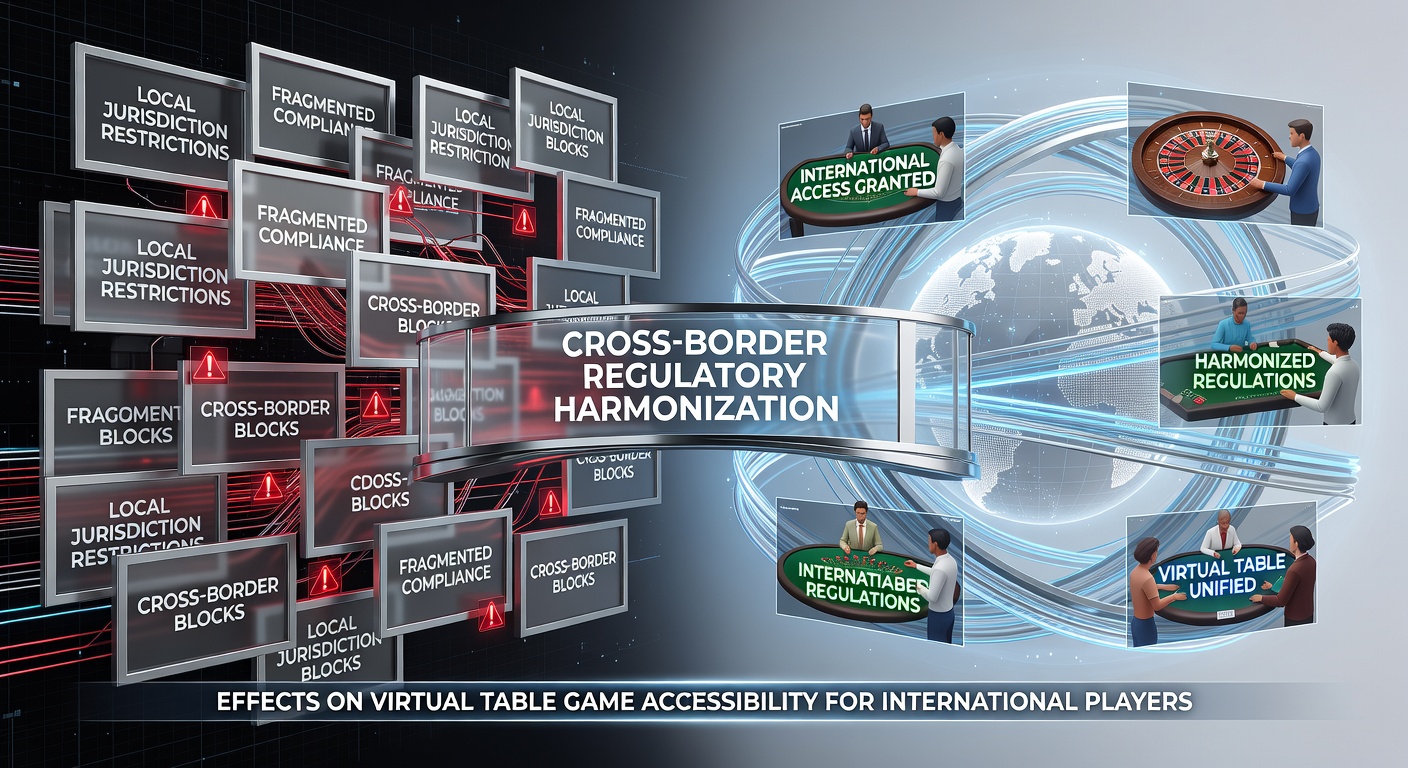
Cross-border regulatory harmonization refers to efforts by governments and international bodies to align rules on online gaming platforms, particularly those offering virtual table games such as blackjack, roulette, and baccarat. These alignments address licensing standards, player verification processes, and technical requirements that vary widely between countries, which creates barriers for users seeking access from different locations.
Key Drivers Behind Harmonization Initiatives
Multiple regions have advanced coordinated frameworks since the early 2020s, with data from the Organisation for Economic Co-operation and Development showing increased collaboration on digital services taxation and consumer protections. European Union directives on digital markets have influenced neighboring states to adopt similar compliance measures for online gambling operators, while Australian authorities have implemented shared guidelines through the Australian Communications and Media Authority that emphasize consistent responsible gaming tools across state lines. Canadian provinces have pursued interprovincial agreements that standardize identity checks for virtual platforms, reducing discrepancies that previously limited player movement between services.
These developments coincide with technological upgrades scheduled for May 2026, when enhanced mobile network capabilities are projected to support higher-quality live dealer streams and faster transaction processing in virtual table environments. Harmonized rules on data encryption and server locations allow operators to deploy these upgrades across borders without separate approvals in each market.
Effects on Player Accessibility and Platform Operations
Standardized age verification protocols have streamlined entry for international users, as operators can apply one set of requirements rather than navigating separate national databases. Research from the University of Nevada's gaming studies program indicates that such uniformity correlates with higher completion rates for account registrations among cross-border participants. Payment processing also benefits when jurisdictions recognize common anti-money laundering criteria, which permits seamless deposits and withdrawals through digital wallets accepted in multiple territories.
Game fairness standards represent another area of alignment, where independent testing laboratories certify random number generators and return-to-player percentages under unified benchmarks. Players accessing platforms from abroad encounter fewer restrictions on game variants once operators meet these shared criteria, although some regions retain limits on maximum stakes or session durations that remain jurisdiction-specific.

Regional Variations and Ongoing Challenges
North American markets demonstrate partial progress through bilateral discussions between the United States and Canada on shared reporting for operator revenues, yet differences persist in how virtual table games classify as skill-based versus chance-based activities. Asia-Pacific nations have explored harmonization via the Asia-Pacific Economic Cooperation forum, focusing on cross-border data flows that support real-time monitoring of player behavior across platforms.
Observers note that enforcement remains uneven, with some operators facing delays when one participating country updates its technical specifications ahead of others. Figures from industry reports compiled by the International Association of Gaming Regulators reveal that compliance costs decrease over time once initial alignment occurs, which encourages more platforms to expand virtual table offerings to international audiences rather than restricting services geographically.
Future Outlook for International Participation
Continued alignment efforts are expected to incorporate emerging standards for artificial intelligence in game monitoring and biometric authentication methods. These additions build on existing frameworks and further reduce friction for users connecting from multiple countries during single sessions. Academic analyses from institutions in Australia highlight measurable increases in platform diversity available to players once regulatory overlap expands.
Operators who achieve certification under harmonized systems gain broader market reach, while players benefit from consistent interface elements and support resources regardless of their physical location at login. Data collected through 2025 shows gradual expansion in licensed virtual table titles accessible across previously fragmented regions.
Conclusion
Cross-border regulatory harmonization continues to reshape access patterns for virtual table games by establishing common operational baselines that span multiple countries. Technological milestones planned for May 2026 stand to amplify these effects through improved connectivity that complements the regulatory groundwork already in place. Stakeholders track these developments through ongoing reports from governmental and academic sources to assess participation trends over successive quarters.